

White grub treatment in Quebec: act before the damage is beyond repair
White grubs are the larvae of the European chafer and the Japanese beetle. Invisible beneath the surface, they silently feed on your lawn’s roots until entire patches lift up like a carpet. In Quebec, an untreated infestation can destroy a lawn in just a few weeks, and the damage often shows up too late.
At cVert, our certified specialists intervene at the optimal point in the larvae’s life cycle, using selective approved insecticides or an eco-friendly nematode-based option. Available in over 250 municipalities across Quebec.
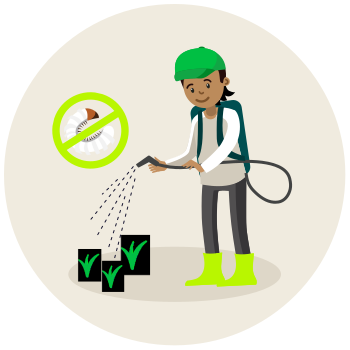
We’re here to help! Use our white grub treatment to protect your lawn!
How to tell if your lawn has a white grub infestation
Grass that lifts up like a carpet
Pull up a damaged section of your lawn. If it comes away with no resistance, it's often a sign that the roots have been eaten by larvae.
White larvae visible beneath the surface
Check the soil under damaged areas. If you find more than 5 white grubs per square foot, it's time to act without delay.
Unexplained yellow or brown patches
Areas of grass that turn yellow despite watering and fertilization often point to root damage caused by larvae.
Burrowing animals digging up your yard
Skunks, raccoons and crows love white grubs. Their frequent presence on your property could be a sign of an active infestation, and their digging adds to the damage already caused by the larvae.
How white grubs attack your lawn: the complete life cycle
To eliminate white grubs effectively, you need to understand when they cause the most damage and when to take action.
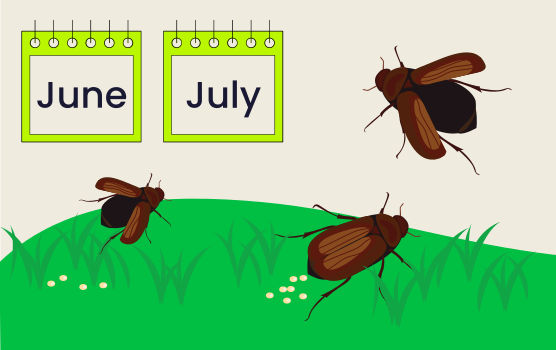
Phase 1 – Laying eggs
In June and July, the Japanese beetle and the European chafer fly from lawn to lawn to lay their eggs.
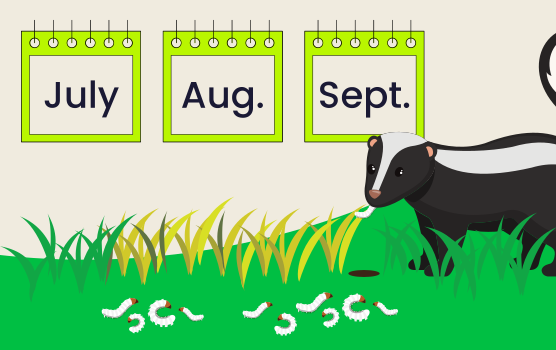
Phase 2 – Appearance of larvae
After the eggs have hatched between July and September, the larvae cause two problems:
1. They attract skunks, which dig into the soil to feast on them, resulting in holes in your lawn.
2. They feed on the roots of the grass, causing the lawn to greatly deteriorate in this area.
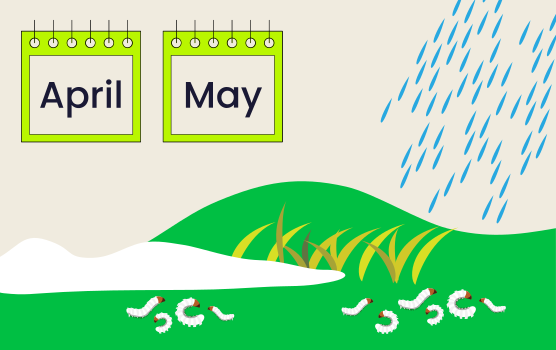
Phase 3 – Patches of dead grass
In April and May, after sinking into the soil during the winter to keep warm, white grubs return to the surface and continue their rampage creating patches of dead grass.
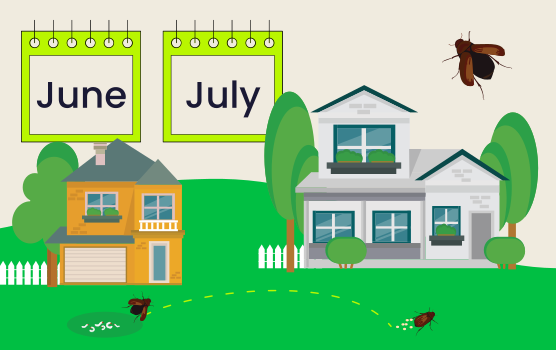
Phase 4 – Infestation
In the following months of June and July, the surviving grubs become adults, fly away, reproduce, and go on to infest surrounding lawns.
The best time to act: july to september
The larvae are young, close to the surface, and vulnerable right after hatching. Waiting until spring means a more difficult corrective treatment. Our specialists assess your lawn and intervene at the optimal time based on your region and the level of infestation.
cVert can help you with white grub control in most regions of Quebec: Trois-Rivières, Centre-du-Québec, Montreal, Gatineau, Quebec City, Sherbrooke and more.
Act fast with our white grub control service
Our white grub treatment: effective, safe, and tailored to your situation
Our approach is built on a combination of effectiveness and common sense. We use selective approved insecticides designed to target white grubs without harming your lawn, plants, or pets. Every treatment is performed by our specialists at the optimal point in the larvae’s life cycle to maximize results from the very first days.
For those who prefer gentler solutions, we also offer an eco-friendly nematode-based option: naturally occurring micro-organisms that attack the larvae directly, with no risk to humans or the environment.
Good to know:
Our treatments are safe, but we recommend keeping pets off the lawn for 24 hours after application.
Complete program
Complete your lawn care program with these services
Lawn repair
If white grubs destroyed entire sections of your lawn, slit seeding is the most effective way to fill them back in. Our technicians can combine both services in a single season.
Learn moreLawn fertilization
A well-fed lawn holds up better against future infestations. A tailored fertilization program strengthens the roots and improves your grass's ability to bounce back after a white grub treatment.
Learn moreLawn aeration
Aeration relieves soil compaction and improves your lawn's natural resilience. Well-aerated soil encourages deep rooting, which makes your grass less vulnerable to pests.
Learn moreLawn insect control
Chinch bugs, sod webworms: other insects can attack your lawn alongside a white grub infestation. A preventive insecticide treatment protects your grass on every front.
Learn moreSoil amendment
Soil with a pH that's too acidic weakens your grass and leaves it more vulnerable to infestations. A lime application corrects the acidity and creates growing conditions that work against pests.
Learn moreFAQ: White Grub Treatment in Quebec
Join the thousands of Quebec homeowners who trust cVert for the health of their lawn, season after season. Winner of the Consumer’s Choice Award for 7 consecutive years, cVert operates in over 250 municipalities in Quebec with local, trained, and certified teams.
Enter your postal code below to receive your personalized price instantly. No commitment, no appointment needed.
White grubs are the larvae of beetles such as the common June beetle, the European chafer, and the Japanese beetle. They are recognized by their C-shaped body, whitish colour, and brownish head. At maturity, they measure between 1.25 and 2.5 cm.
They live beneath the lawn and feed on grass roots, causing yellowing, dead patches, and potentially irreversible damage if the infestation is not treated quickly.
Timing is critical. In Quebec, there are two key periods for effective white grub treatment.
Late summer (August to September): This is the best time to intervene, right after the eggs hatch. The larvae are young, close to the surface, and therefore easier to eliminate. Treatment at this stage delivers the best results.
Spring (April to May): When white grubs resurface after winter, a spring treatment helps limit damage if an infestation is already present.
Our specialists assess the condition of your lawn and choose the right product, at the right time, based on the level of infestation and your region.
White grubs appear when adult beetles lay their eggs in your lawn in June or July. Certain conditions make your lawn more attractive: dense, sunny grass, well-drained sandy soil, and the presence of outdoor lights in the evening, which attract flying adults. Ironically, a well-maintained lawn can become a prime target.
How to get rid of white grubs?
There are a number of best practices for dealing with grubs:
- Maintain a good mowing height, practice proper watering (water regularly but not excessively) and use appropriate fertilizers.
- Introducing nematodes (natural predators of larvae) into the soil is an effective preventive and ecological solution.
- Avoiding excessive use of outdoor lights during the adult cockchafer egg-laying period can reduce the risk of infestation.
- Annual aeration of your lawn can help water penetrate the soil, encouraging plant roots to grow deeper.
cVert uses selective approved insecticides specially designed for white grub treatment while respecting the environment. These products have a long-lasting repellent effect and are chosen to preserve biodiversity, without harming plants, animals, or property occupants. Product selection may vary based on municipal regulations. An eco-friendly nematode-based option is also available for those who prefer natural solutions.
Several best practices reduce the risk of infestation: mow at a height of 7 to 8 cm, water regularly without overdoing it, aerate the lawn every year, and reduce outdoor lighting in the evening during June and July to limit the attraction of flying adults. In the case of an active infestation, these preventive measures should be combined with a targeted treatment.
European cockchafer (Melolontha melolontha)
Present in Quebec, these 25-30 mm long beetles have larvae that damage plant roots over 3-4 years. Dark brown to black adults.
Common beetle (Phyllopertha horticola)
Smaller (12-15 mm), reddish-brown with green or black wings. Larvae attack plant roots, life cycle of about one year.
Japanese beetle (Popillia japonica)
Invasive pest in the USA and Canada, 8-11 mm, metallic green elytra, coppery sides. Feeds on over 300 plant species, larvae destroy lawns.
The price varies depending on the size of your property and the level of infestation. Get your personalized price in 3 seconds by entering your postal code in our online quote tool, no commitment and no appointment necessary.
